About the family
“If I were not Emperor, I would wish to be a teacher. I know of no greater or nobler mission than to guide young minds and prepare the men of the future.”

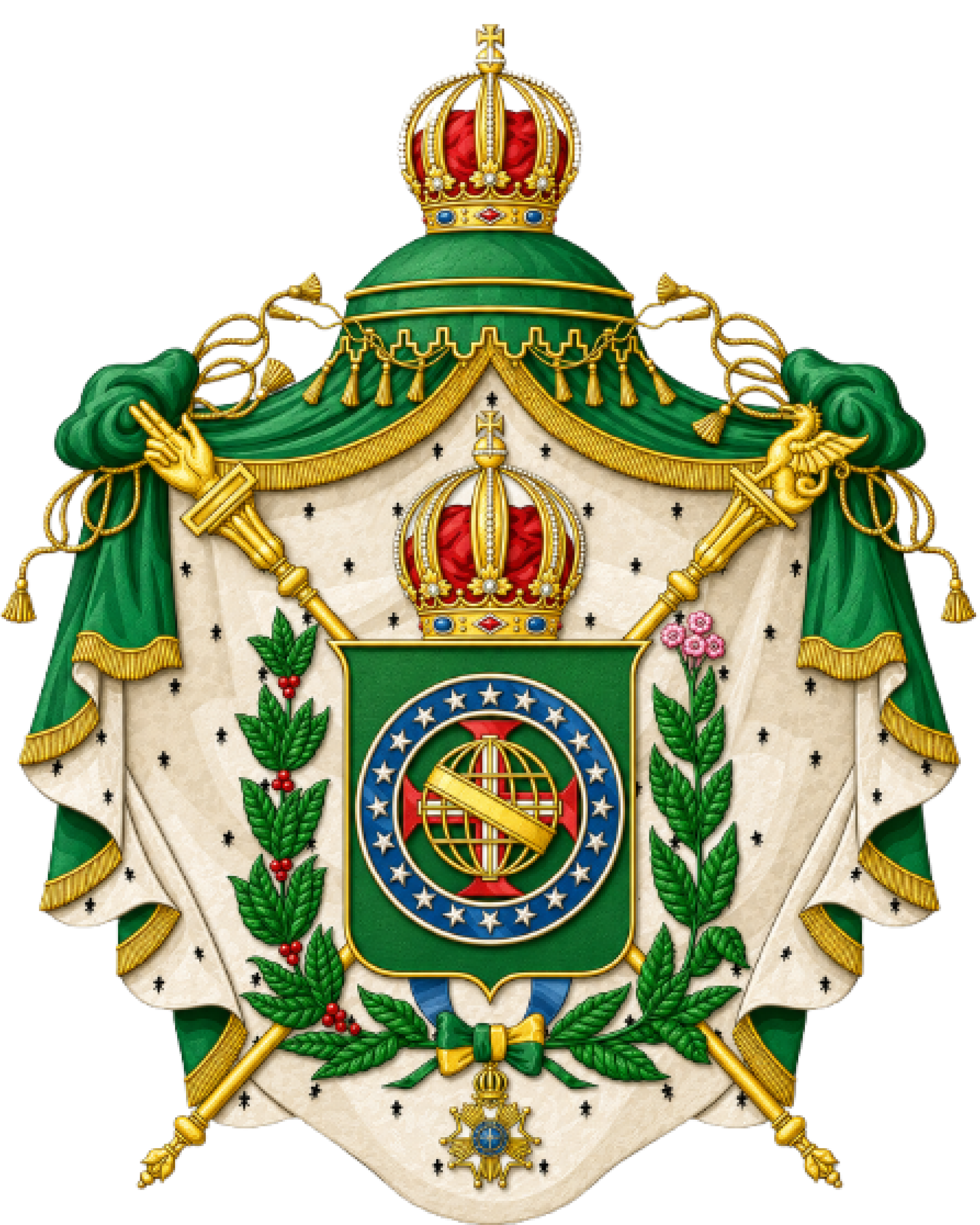
The origins of the Brazilian Imperial Family – or the Imperial House of Brazil – date back to 1822, when the Prince Royal of Portugal and Regent of Brazil, Dom Pedro de Alcântara de Bragança, having proclaimed Independence on September 7th, was acclaimed Constitutional Emperor and Perpetual Defender of Brazil on October 12th.
The Emperors of Brazil, like their ancestors, the Kings of Portugal, were members of the Most Serene House of Bragança, reigning since 1640 and descending from King Dom Afonso I, who founded the Kingdom of Portugal in 1139.
In 1864, the Princess Imperial of Brazil, Dona Isabel de Bragança, daughter and heiress to Emperor Dom Pedro II, was wed to Prince Gaston of Orleans, Count d’Eu, a member of the French Royal Family. From their legitimate, princely male descent comes the House of Orleans-Bragança — that is, the Imperial House of Brazil — which descends through a legitimate patrilineal line from the Kings of France, members of the millennial Capetian Dynasty, such as Saint Louis IX and Hugh Capet, who was elected King of the Franks in 987.
Brazilian Princes and Princesses, whether dynasts or not, owe respect and deference to the Head of the Imperial House of Brazil, our Emperor de jure (meaning "by right"), who, under Articles 11 and 98 of the Political Constitution of the Empire of Brazil of March 25, 1824, is the ultimate representative of the monarchical tradition in this country.
However, beyond biological succession, the Imperial Family has always preserved — as its most precious legacy, from the coup d'état that established the Republic in Brazil on November 15, 1889, to the present day — fidelity to its historical mission.
During their long exile from 1889 to 1945, and after their return to the Homeland, successive Heads of the Imperial House — from Emperor Dom Pedro II to his great-great-grandson, Prince Dom Bertrand of Orleans-Bragança, current depository of the rights to the Throne and the Crown of Brazil — have consistently provided notable proof of this fidelity and have never shirked the duties intrinsic to their status as members of the Imperial Family.